

Independent local newspapers were bought up by large media groups, centralised, and managed from cities miles from the communities they were meant to serve. “Local” news became a digest of pooled regional stories, often delayed, with genuinely local issues rarely covered. Bedford was heading the same way.
That matters beyond nostalgia. Without relevant local news, residents can’t hold their council to account, hear about local crime, or know what’s happening to local businesses. They can’t participate in local democracy in an informed way. The Bedford Independent was founded, by a team who all live in the town, to fix exactly that.
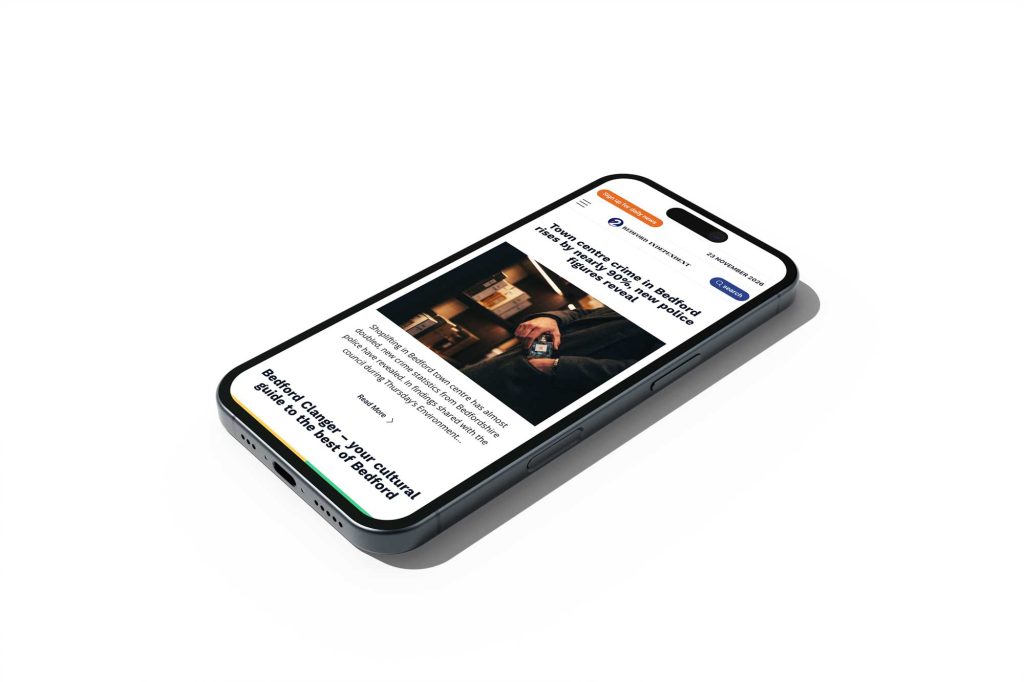
We worked with the team to build a mobile-first news platform designed for how local news actually travels: through social platforms, on phones. Speed of publishing mattered, because responding faster than competitors was part of the editorial strategy.
Crucially, the revenue model was built into the platform from day one: an advertising platform, classified listings, and integrations including local property listings. Sustainable local journalism needs more than goodwill, and the site was engineered to earn its keep.
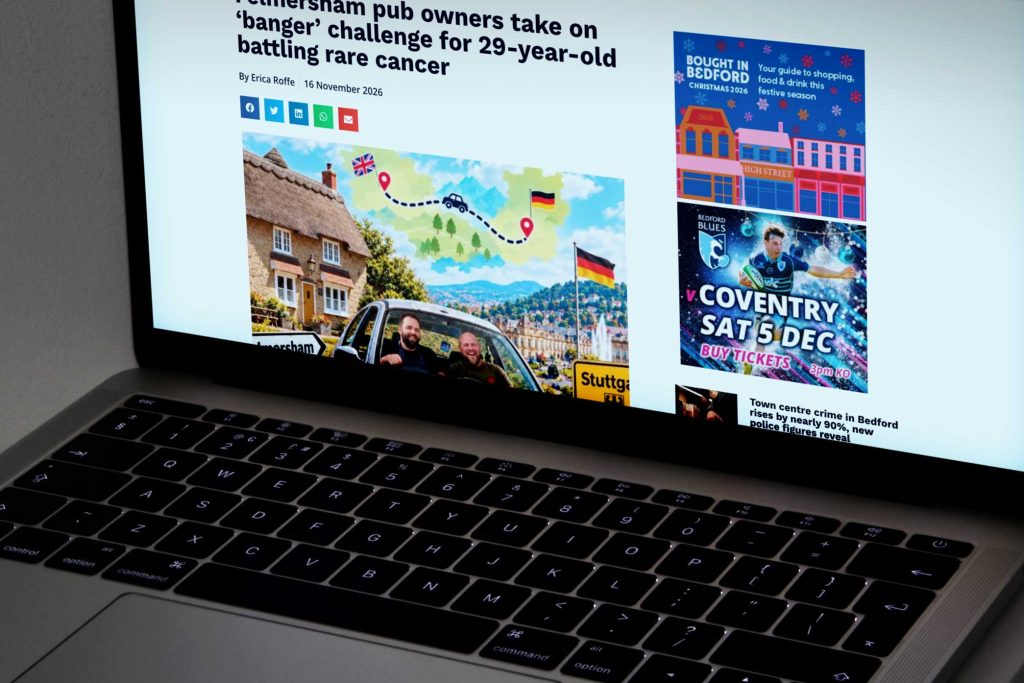
The response was immediate. In the first month after its 2018 soft launch, the site received over 30,000 unique users. Within a year it was reaching over 150,000 unique visitors per month, in a town with a population of 196,398. For context, the biggest established local print newspaper circulated 80,000 copies at its peak.
The longer-term proof is simpler: the Bedford Independent is still publishing today, eight years on, through a period in which local titles across the UK closed. A hyperlocal model that sustains itself is the rarest outcome in local news.